
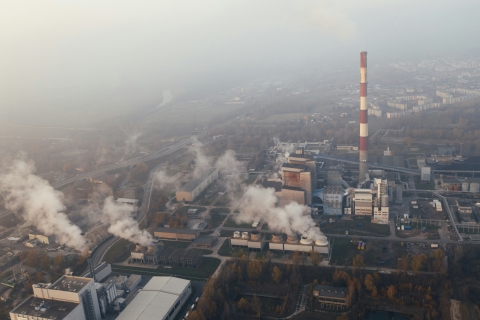
Various recent government coalitions have declared in their agreements the importance of making Estonia’s economic model more climate-neutral and sustainable. The goal set by the government is to determine by the Climate Resilient Economy Act the paths for different sectors to transition to clean economy. The National Audit Office was interested to find out whether the state, as the owner of its own enterprises, has set an example and also taken steps to deal with the environmental footprint of its own enterprises.
The overview covered 19 state-owned enterprises (see left column). Eesti Energia and Tallinna Sadam were excluded from the overview, as their activities (as listed companies) have been publicly addressed.
The government has not considered it necessary to set greenhouse gas emission reduction targets for state-owned enterprises. The ministries that manage shareholdings in state-owned enterprises consider it necessary that the objectives considered relevant by the state are agreed in the principles of the shareholding policy, which are prepared by the Ministry of Finance and approved by the government. The ministries that manage shareholdings admitted that their awareness of climate issues, including the measurement and reduction of greenhouse gas emissions, is limited. The National Audit Office also finds that it would be reasonable to agree in the principles of the shareholding policy in which cases and in what form the reduction of greenhouse gas emissions should be included in the owner’s expectations, i.e. it should be decided for which state-owned enterprises, given their area of activity and size, setting central goals would be possible and reasonable.
Targets for the reduction of greenhouse emissions have been clearly outlined for two enterprises in the document of owner’s expectations established by the ministries that manage shareholdings in state-owned enterprises. For the others, this area has either not been addressed or it has been described in general terms.
Several enterprises have still implemented measures to reduce greenhouse gas emissions themselves, irrespective of the content of the owner’s expectations. Neither the ministries that manage shareholdings nor the Ministry of Climate or the Ministry of Finance are planning to aggregate the data needed to assess the full impact of the greenhouse gas emissions of state-owned enterprises, as this information is seen as unnecessary.
The Secretary General of the Ministry of Climate admitted in his reply to the National Audit Office that although the coverage of greenhouse gas emissions in owner’s expectations is scant or generally related to environmental aspects, several enterprises have described their activities to achieve sustainability in their annual reports, also indicating their greenhouse gas emissions.