
The National Audit Office is an independent institution acting in the interests of the Estonian taxpayer. Its role is to investigate how the state and local authorities have spent the taxpayer’s money and what has been achieved with it.

The independence of the National Audit Office is secured by the Constitution and the National Audit Office Act. No one can order us to perform mandatory audit assignments. We decide on our own what, when and how to audit.

Based on the recommendations of the National Audit Office the Estonian Parliament (the Riigikogu) and the Government can improve the functioning of the state and use the taxpayer’s money more responsibly.

What and who we audit

Strategy of NAOE 2024-2028

In the autumn of 2024, the Auditor General approved the new strategy of the National Audit Office for 2024–2028 in order to guide the organisation’s activities even more precisely than before and to guide   the selection of audit topics, audit methods, and the use of resources. The strategy emphasises a proactive approach, the importance of follow-up activities after audits, and the implementation of shorter and more focused projects to support better decision-making.

The organisation’s core values — objectivity and independence, competence and diligence, cooperation and openness, integrity and dignity — which guide the daily work of the National Audit Office, remain unchanged in the strategy.

Strategy 2024–2028

Annual report of NAOE

Each spring we draw up and submit our office’s own annual report to Parliament. It contains an overview of the work performed during the previous year as well as of the management of our office’s finances. 

The report traditionally gives an overview of the primary activities of the National Audit Office and the work of audit departments along with brief summaries of the audit results. In addition, the report covers the most significant support-service activities and personnel changes during the reporting year, as well as statements of the Auditor General in the media. The report is given an independent opinion by the external auditor appointed by Parliament. 

Rombid

Structure

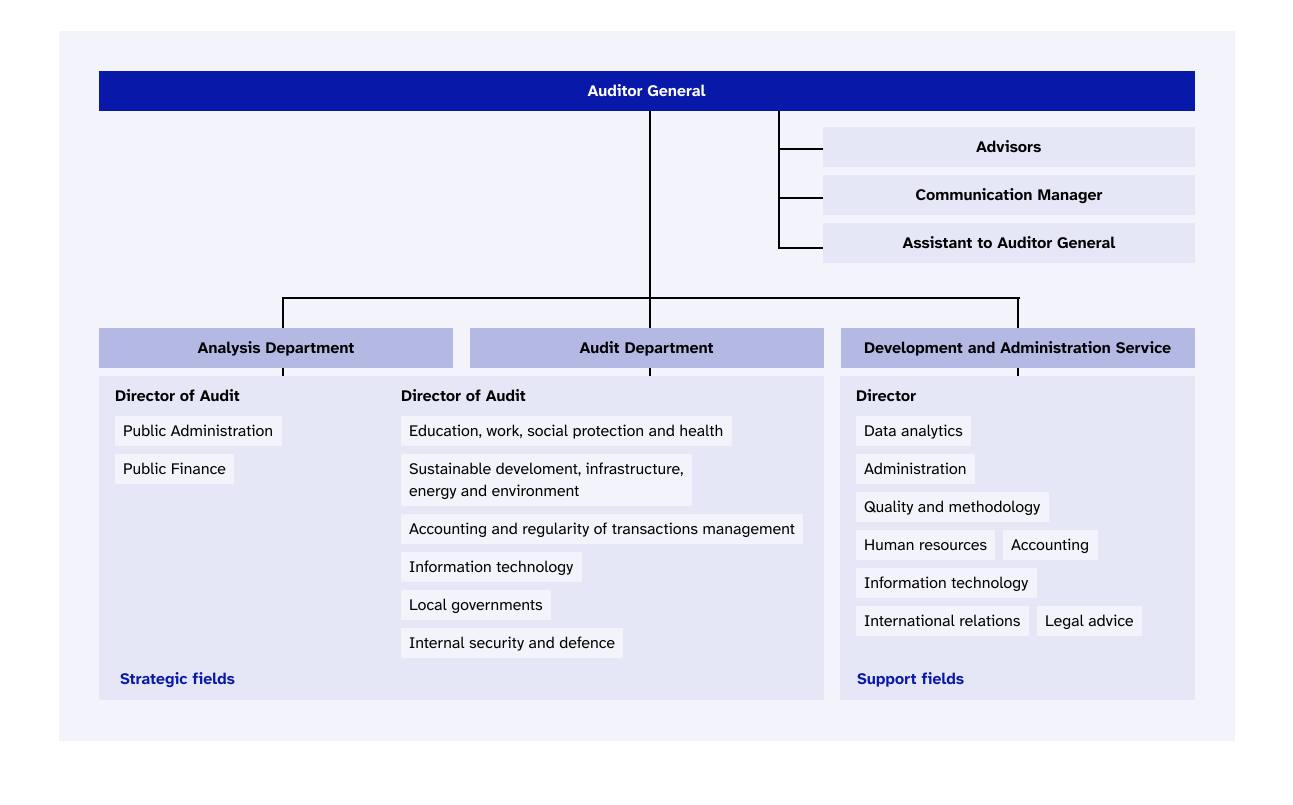
There are three structural units in the National Audit Office:

The Audit Department

The Audit Department carries out financial, compliance and performance audits in the focus areas of education, work, social protection and health; sustainable development, infrastructure, energy and environment; internal security and defence; information technology; local governments; accounting, reporting and financial management.

The Analysis Department

The Analysis Department monitors and analyses the sector of public finance and administration as well as other issues of significant economic impact, proceeding from the guidelines of the Auditor General. Main outputs of the Analysis Department are overviews and special works.

The Development and Administrative Service

The Development and Administrative Service supports the audit function and guarantees the operations of the National Audit Office in areas such as human resources management; information technology; international relations; accounting; methodology, planning and analysis; building management, and records management.

Supervision of the NAOE

Annual audit

The activities of the National Audit Office are audited annually by an audit firm appointed by Parliament, which provides an independent opinion on our annual report.

Peer reviews

By decision of the Auditor General, peer reviews are carried out – an external assessment conducted by expert colleagues from other supreme audit institutions. The international peers give an opinion on various aspects of the institution’s activities, including its compliance with international standards and the environment (primarily the legal framework) in which it operates.

The most recent peer review was conducted in 2015, when the Netherlands Court of Audit and the supreme audit institutions of Sweden and Poland assessed the work of the National Audit Office. Valuable recommendations were received for both strategic development and, in particular, the organisation of daily work. 

Budget and procurements

Budget


The activities of the National Audit Office are financed from the state budget, which is approved annually by Parliament.
Approximately 73% of our institution’s budget consists of staff costs. About half of the operating expenses are made up of the rent and maintenance costs of the building we use, paid to the State Real Estate Ltd (RKAS). The remaining operating costs relate to staff development and training, information technology, communication, international relations, office expenses and the use of external experts.

Procurements

The National Audit Office organises procurements based on a plan approved by the Auditor General.

open graph imagesearch block image