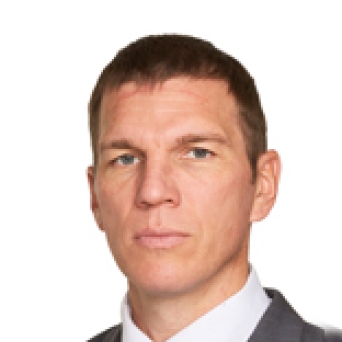
“The state’s support for the development of the venture capital market may be justified, but millions from the state budget should not simply be left pending, with management fees also being paid on that pending money, whilst short-term bonds are being issued to cover the state’s day-to-day expenses,” said Auditor General Janar Holm. “This approach is not responsible – the Ministry of Economic Affairs and Communications must be better able to assess when funds are needed for investment. The Ministry should also clearly define what results are expected and when, and how the achievement of these results will be assessed. At present, the vagueness of the objectives makes it impossible to assess the performance or the justification of the previous venture capital investments in a meaningful way.”
A total of almost €466 million has been allocated from the state budget for participation in SmartCap’s venture capital funds, but the size and timing of the contributions have not been aligned with the funds’ actual investment needs and pace. According to SmartCap, reaching agreements on venture capital investments is a process that takes several years, as hundreds of potential investment projects must be analysed before a single investment can be made. By the end of 2025, the portfolio contained investments in 17 companies and 16 sub-funds, with investment agreements totalling €230.4 million and payouts amounting to €119.5 million. SmartCap’s funds had €261 million in available funds for future investments and expenditure, which have largely been held in fixed-term deposits.
A large part of the capital paid to SmartCap from the state budget has not yet been used for investments, but has been held in deposits and has earned interest. In the usual operating logic of venture capital funds, investors contribute capital to the fund when it is needed to fulfil a previously undertaken investment commitment. However, the state has transferred funds to SmartCap’s funds, for which investment opportunities are only just beginning to be sought. Whilst the money has been held in a fixed-term deposit pending investment, the Ministry of Finance had to borrow to cover the State Treasury’s day-to-day expenses.
The objectives set for the funds are defined broadly and there are no measurable target levels. The objectives of the venture capital funds managed by SmartCap are to improve access to capital for innovative companies, to develop green technologies and to strengthen the defence industry. No clear target levels or deadlines have been set for these objectives. Where objectives are vague, it is basically impossible for the state to assess whether the investments made have achieved their targets and whether the management company’s performance has met expectations.
In the management of venture capital investments, the boundaries between the roles of policy-maker, owner and oversight have become blurred. In the case of SmartCap’s funds, the Ministry of Economic Affairs and Communications acts simultaneously as the developer of policy measures, the investor and the body responsible for monitoring compliance with funding agreements, and this creates the risk of role overlaps and reduces the transparency of decision-making processes.
Substantive investment rules are spread across several documents and are largely confidential. Although the rules of the fund contain trade secrets, they also include information which is not confidential in nature and which could be made public, given that the fund invests money received from the state budget.
The decision-making materials submitted to the Government for the allocation of funds do not provide a sufficiently balanced overview of the funds’ financial position, risks, costs and potential budgetary implications. Explanatory letters have often focused on describing the market failure that exists in the Estonian venture capital market and the expected positive impact, but the risks, alternatives and costs that are significant from an investor’s perspective have been addressed inconsistently.
In order to develop the Estonian capital market SmartCap’s funds also invest abroad. More than half of the total value of the fund’s investment commitments has been allocated to foreign fund managers, on the assumption that future investments returning to Estonia from large-scale sub-funds will exceed SmartCap’s initial investment.
In his reply to the National Audit Office, the Minister of Economic Affairs and Industry noted that the Ministry of Economic Affairs and Communications had already updated the reporting of the funds and had begun to carry out an impact assessment of the state’s venture and private capital interventions. Efforts are also being made to explore options for depositing SmartCap’s available funds with the State Treasury, and there are plans to update the owner’s expectations and governance model of SmartCap in order to clarify the division of roles and responsibilities.
Background
The National Audit Office compiled an overview of the funds allocated to SmartCap’s funds and their investment activities, and analysed how the setting of objectives for and oversight of SmartCap’s funds are organised.
AS SmartCap is a subsidiary of the Estonian Business and Innovation Agency (EIS). The investor of the venture capital funds managed by SmartCap and its shareholder is the Republic of Estonia and the owner’s representative is the Ministry of Economic Affairs and Communications.
The state’s investments in SmartCap’s funds gained momentum in 2021, supported by the €100 million Green Fund measure of the Recovery and Resilience Facility. As the successor to the Development Fund, AS SmartCap had previously managed the Venture Capital Fund, to which the government decided to allocate a further €230 million in 2022–2023, and a total of €100 million was allocated for investment in the Defence Fund in 2024–2025.
| Venture Capital Fund | Green Fund | Defence Fund | |
|---|---|---|---|
| Paid-in capital | €265.7 million | €100 million | €100 million |
| Net asset value of fund as at 31.12.2025 | €273.7 million | €101.7 million | €100.5 million |
| Amounts paid out for investments as at 31.12.2025 | €55.7 million | €59.2 million | €4.51 million |
| Source of funding | State budget | EU Recovery and Resilience Facility | State budget |
| Objective and strategic focus | Increasing the value of the fund’s assets, contributing to the growth of the Estonian capital market and innovative companies | Increasing the value of the fund’s assets by supporting the development and adoption of innovative green technologies and by contributing to the European Union’s environmental objectives | Developing Estonia’s defence industry, supporting innovation and economic growth, and increasing the long-term value of the fund’s assets |
| Target groups by location | Funds with a primary focus on Estonia; international funds may also be considered if they support the development of the Estonian market or the strategic objectives | No geographical restrictions have been set out in the rules of the fund | Companies operating primarily in Estonia or in NATO member states, provided that the investment creates strategic value |
| Investment period | Indefinite, returns are reinvested | Investment commitments were taken until Q2 2026. Reinvestment or payouts are decided by the management company | Indefinite, returns are reinvested |